Scope of Application
The HSLW1 series intelligent air circuit breakers (hereinafter referred to as the circuit breakers) are applicable to AC 50 Hz power distribution networks with a rated voltage up to 660 V (690 V) and below, and a rated current ranging from 400 A to 6300 A. They are designed for electric power distribution and protect circuits and power supplies against damages caused by overload, undervoltage, short circuit, single-phase earth fault and other faults.Equipped with intelligent protection functions, the circuit breakers deliver accurate selective protection to enhance power supply reliability and prevent unnecessary power outages of the power system. Fitted with an open communication interface, they support four-remote control to meet the demands of centralized control centers and automatic systems.At an altitude of 2000 meters, the impulse withstand voltage of the circuit breaker is 8000 V; values for other altitudes shall be revised in accordance with relevant standards, with a maximum limit of 12000 V. When not fitted with intelligent controllers and sensors, the circuit breaker can be used as an isolator with corresponding marking.
The circuit breakers comply with standards including GB 14048.2 Low-voltage switchgear and controlgear – Low-voltage circuit-breakers and IEC 60947-2 Low-voltage switchgear and controlgear – Circuit-breakers.
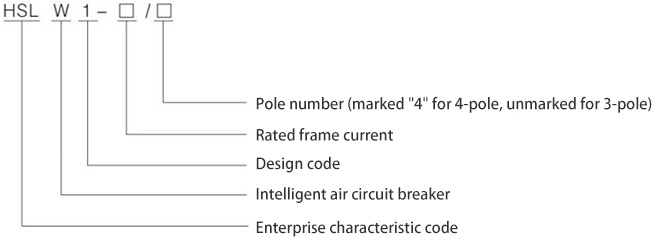
Model Designation & Definition
Product Classification
Classification
1.By mounting type:
a. Fixed type
b. Draw-out type
2.By pole number:
a. 3-pole
b. 4-pole
3.By operating mode:
a. Motor-operated
b. Manual operation (for inspection and maintenance)
Types of Trip Units
Intelligent overcurrent controller, instantaneous (or delayed) undervoltage trip, shunt trip.
Specifications of Intelligent Overcurrent Controller
1. The intelligent controller is available in three grades: Type H (for communication), Type M (standard intelligent type), Type L (economic type).
2. Equipped with long-time inverse-delay for overload, short-time inverse-delay, definite-time delay and instantaneous protection functions. Required protection characteristics can be configured via user parameter setting.
3. Single-phase earth fault protection.
4. Display functions: set current reading, tripping current reading and line voltage reading (voltage display to be specified upon order placement).
5. Alarm function: overload alarm.
6. Self-check function: overheat self-inspection and microprocessor self-diagnosis.
7. Test function: verify operating characteristics of the controller.
Brief Introduction to Circuit Breaker Construction
Fixed-type circuit breakers mainly consist of contact system, intelligent controller, manual operating mechanism, motor-driven operating mechanism and mounting plate.
Draw-out circuit breakers are composed primarily of contact system, intelligent controller, manual operating mechanism, motor-driven operating mechanism and draw-out cradle.
The circuit breaker adopts a three-dimensional layout featuring compact structure and small overall dimension. The contact system is encapsulated inside an insulated base plate, with each phase contact housed in an independent compartment. Mounted sequentially on the front are separate modular units including the intelligent controller, manual operating mechanism and motor-driven operating mechanism, facilitating routine maintenance and overhaul.
A draw-out circuit breaker comprises a plug-in breaker body and a draw-out cradle; the breaker body slides along built-in guide rails of the cradle for rack-in and rack-out operation. It has three defined service positions: Connected, Test and Disconnected, switched by rotating the operating handle, with corresponding position readings indicated via pointers fitted on the bottom crossbeam of the draw-out cradle.
At the Connected position, both main circuit and secondary control circuit are fully connected. At the Test position, the main circuit is disconnected and isolated by insulating barriers while only the secondary circuit remains energized to permit functional tests. At the Disconnected position, all main and secondary circuits are completely open.
Fitted with a mechanical interlock device, the draw-out circuit breaker can only be closed at the Connected position; closing is mechanically prohibited at the intermediate position between Connected and Test.
Performance of Intelligent Trip Unit
1. Intelligent trip units are available in three versions: Type L (Economy), Type M (Standard), and Type H (Communication-enabled).
2. It features four-stage protection characteristics including long-time inverse-delay overload protection, short-time inverse-delay (and definite-time) short-circuit protection, instantaneous short-circuit protection, and unbalanced earth/neutral fault protection. For Type L, definite-time short-time delay short-circuit protection and unbalanced earth/neutral fault protection are optional extras.
3. Setting Function: Protection parameters can be configured to form customized protection characteristics as required. Type L adopts coding and DIP switches for parameter setting; Type M and Type H use digital display plus pushbutton setting.
4. Display Function: Indicates the operating current of circuit breaker and various protection statuses.
5. Self-check Function: Performs over-temperature environmental self-diagnosis, as well as self-inspection on built-in MCU components including CPU, ROM, RAM and I2C communication circuit.
6. Fault Memory Function: Stores fault current, delayed operating time and fault type when tripping occurs due to circuit faults.
7. Thermal Memory Function: Records heat accumulation of circuits and equipment caused by overload and short circuit; memory resets after power cut-off.
8. Test Function: Conducts tripping or non-tripping tests for circuit breakers by simulating on-site fault conditions.
9. Optional Add-on Functions: Voltmeter measurement, load monitoring, various overload alarm signal output, MCR make-break control and simulated tripping protection.
10. In addition to all functions of Type M, Type H intelligent trip unit is equipped with serial communication interface to build master-slave LAN. The system uses 1 or 2 computers as master stations and multiple intelligent circuit breakers or other communication devices as slave stations, enabling remote four-remote control functions for individual breaker units.
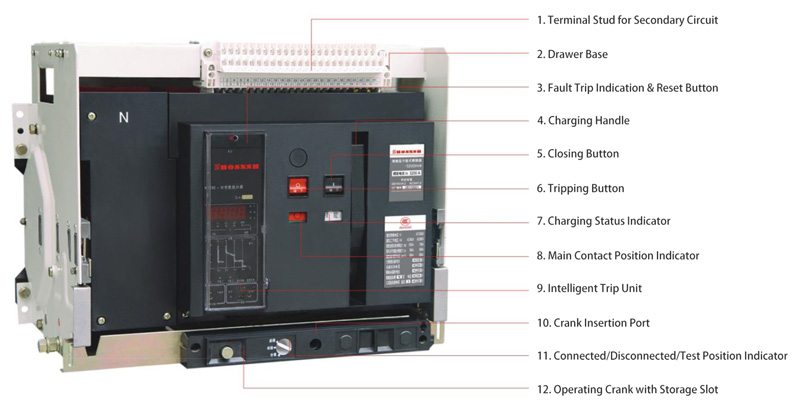
Circuit Breaker Structural Schematic
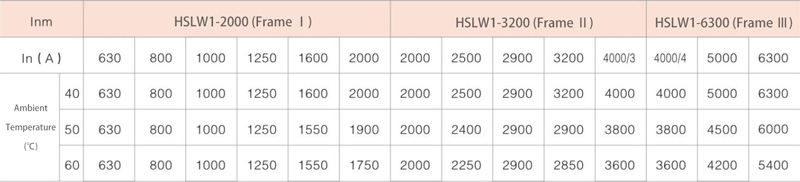
Variation of Rated Continuous Current of Circuit Breakers at Different Ambient Temperatures
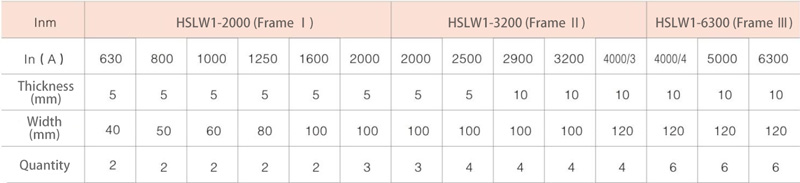
Copper Busbar Installation Requirements for Circuit Breaker Users
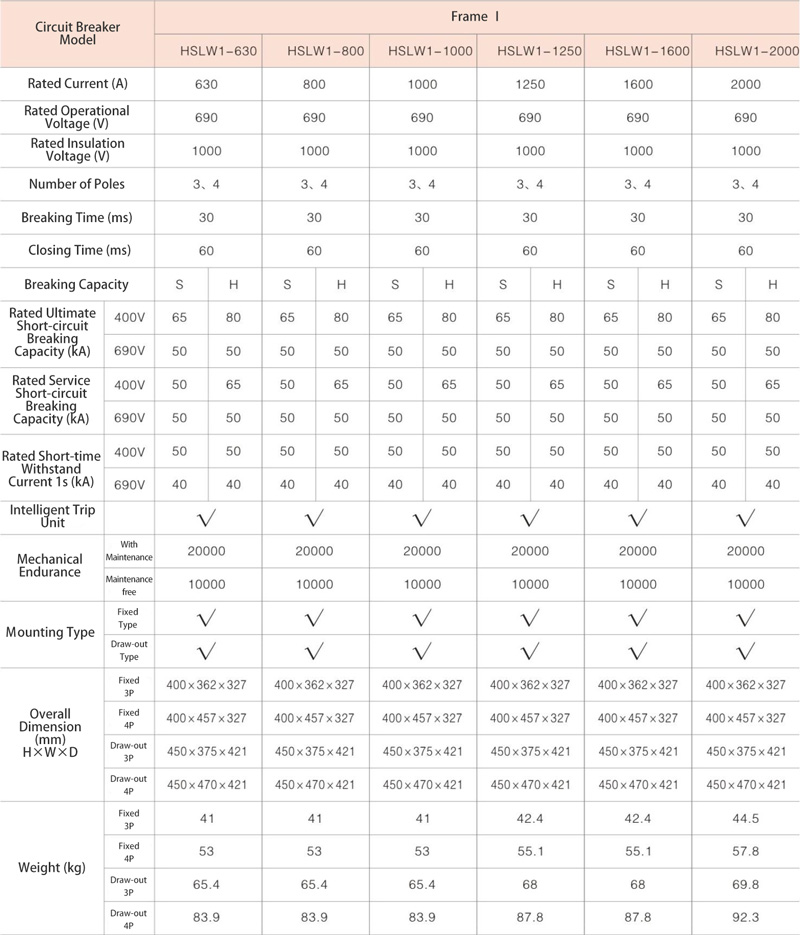
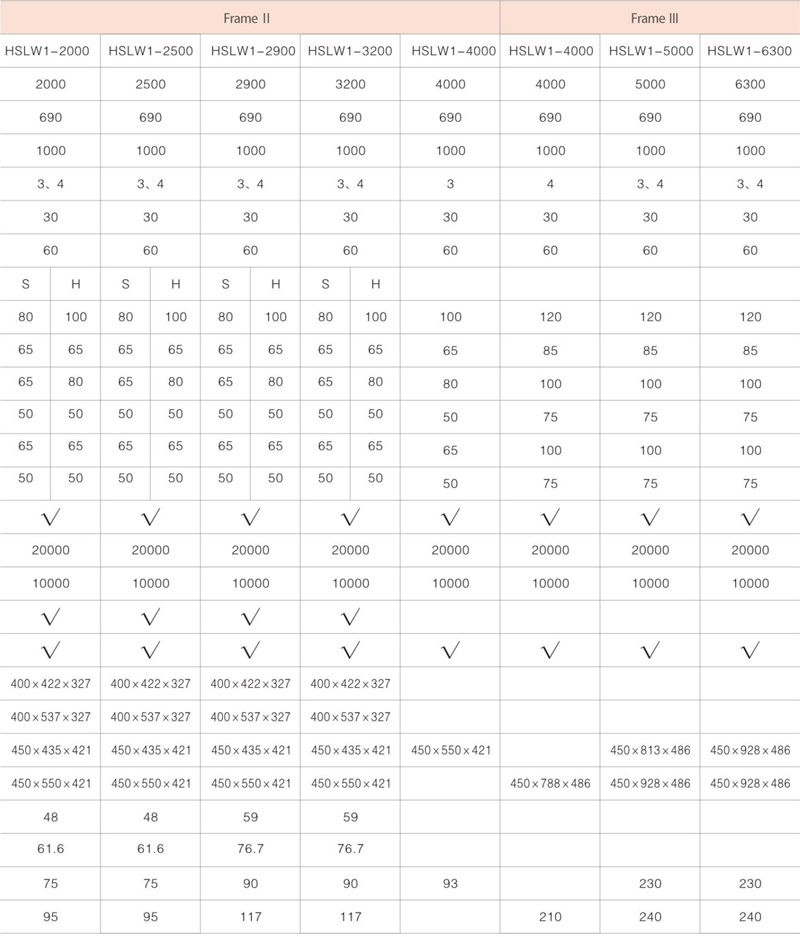
Technical Data and Performance of Circuit Breaker
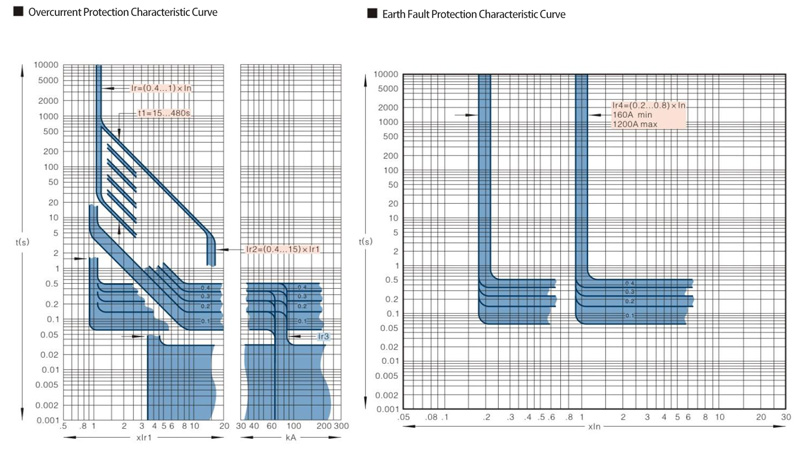
Characteristic Curves of Overcurrent Protection and Earth Fault Protection
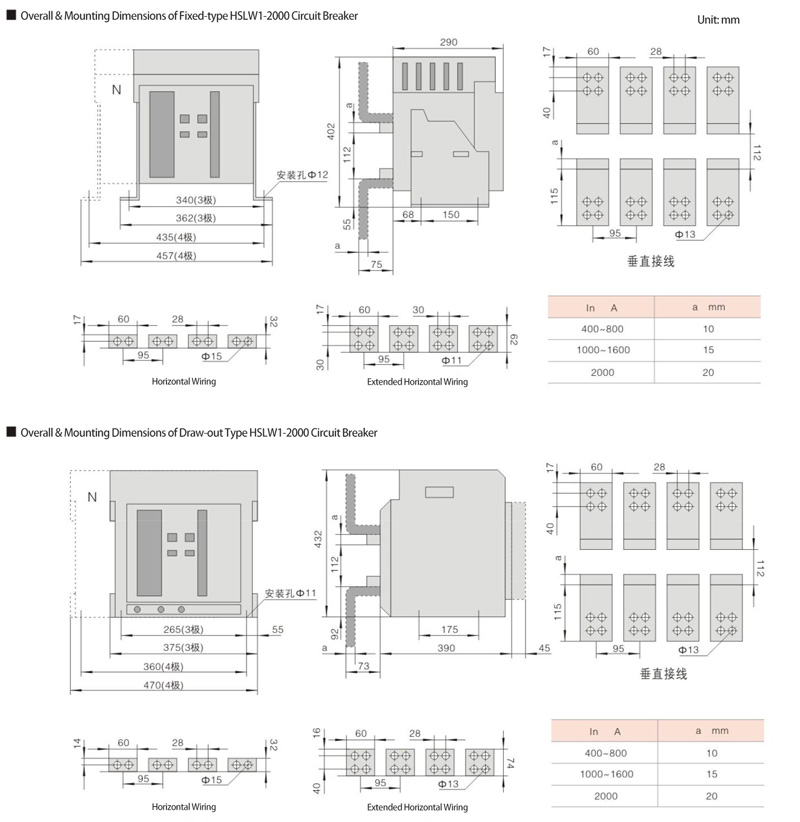
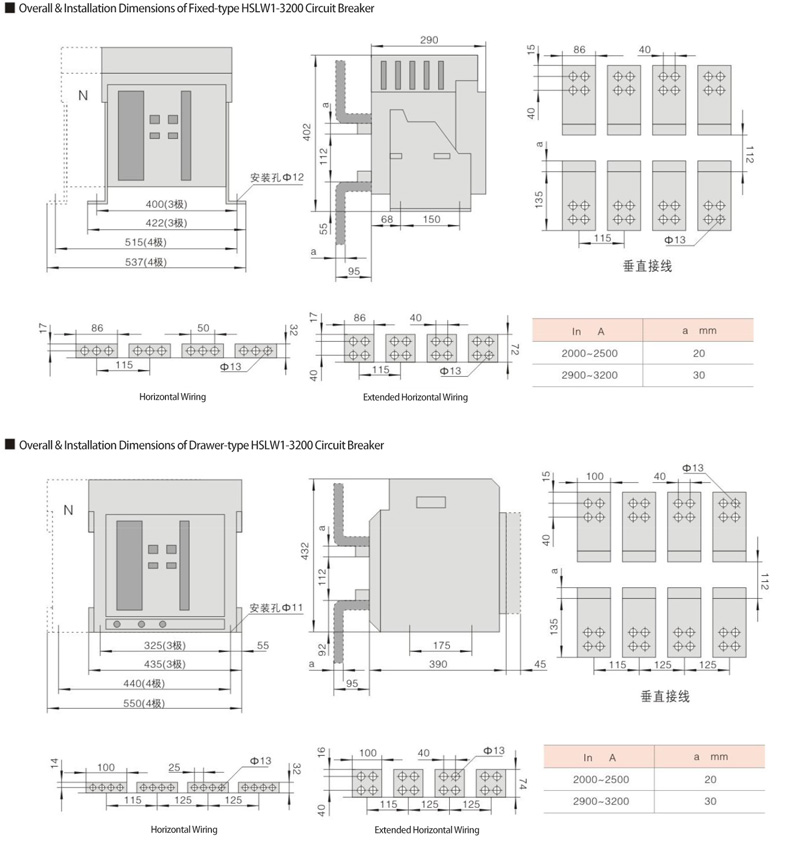
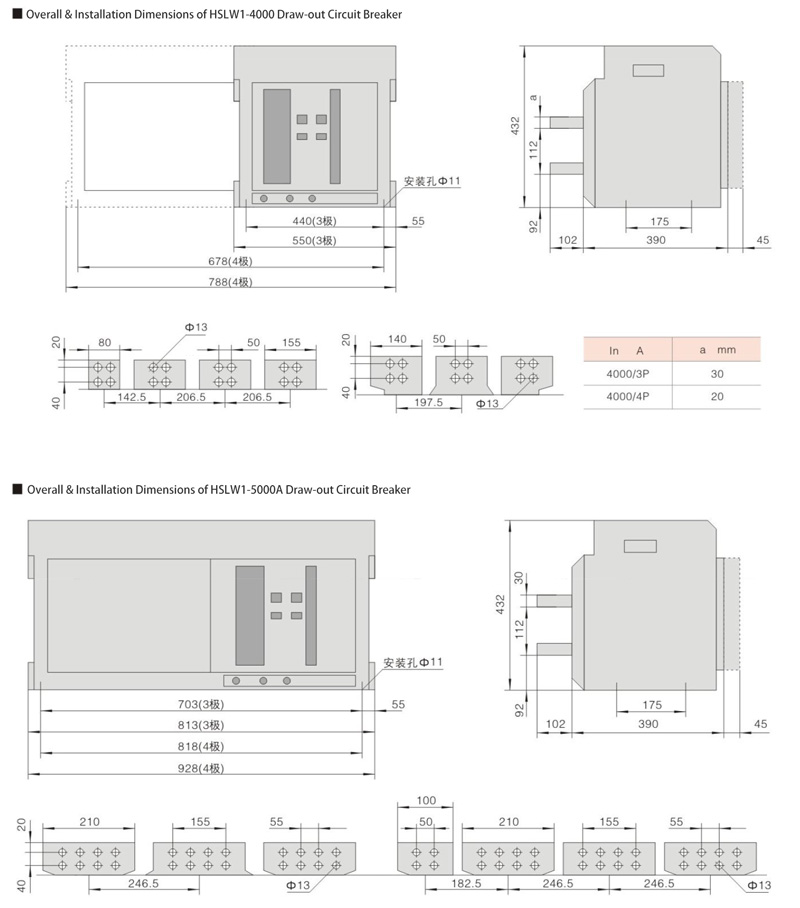
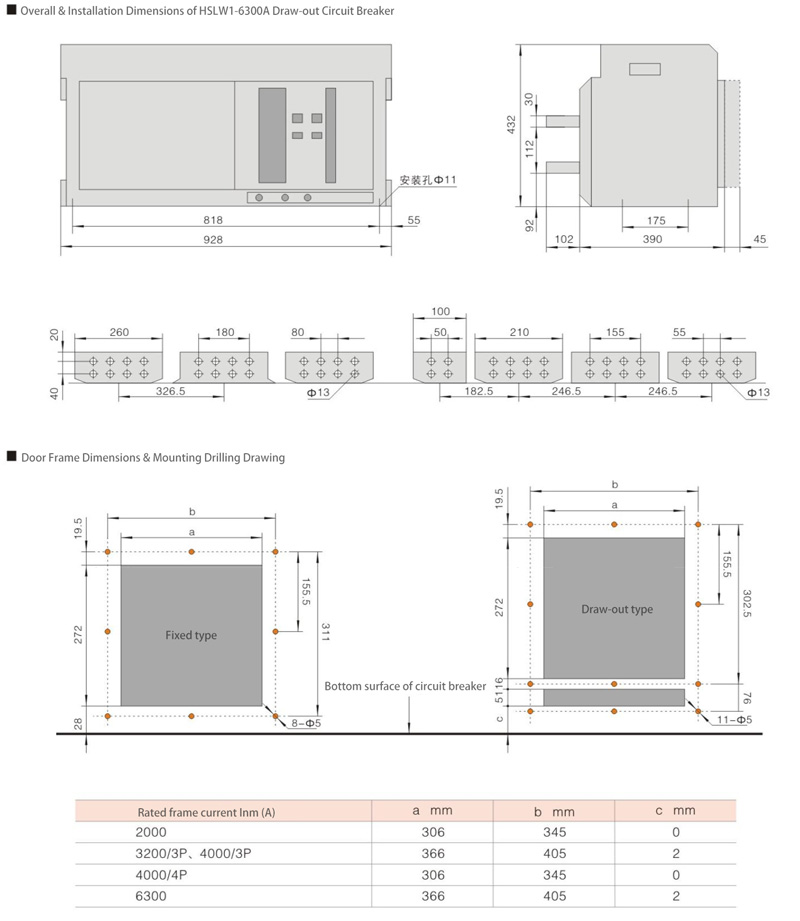
Overall & Mounting Dimensions of Circuit Breaker
Phone: +86 18066329111
E-mail: liuran8020gmail.com
Address: Yanpan Industrial Zone, Yueqing City, Zhejiang Province









 Español
 Portugues
 Pусский
 العربية
 Türk dili
 Indonesia
 Tiếng Việt
 қазақ
қазақ فارسی
فارسی українська
 беларускі
 Filipino
 o'zbek
 български
 тоҷикӣ
 kiswahili
 Монгол
 አማራ
አማራ Ilocano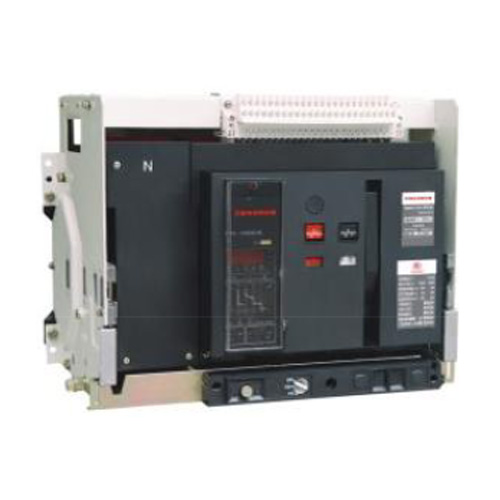



 WhatsApp
 Phone
Phone E-mail
 Message